Why is Asterisk preferred for AI conversational telephony bridges?
Asterisk provides battle-tested PBX stability, robust PJSIP signaling, high concurrent channel handling, and flexible media streaming bridges like AudioSocket.
Editorial review
This article is reviewed by the Yanitly editorial team for product accuracy, privacy and security claims, and integration references. Technical claims are kept aligned with official documentation or observed Yanitly product behavior.
Updated: 2026-09-18

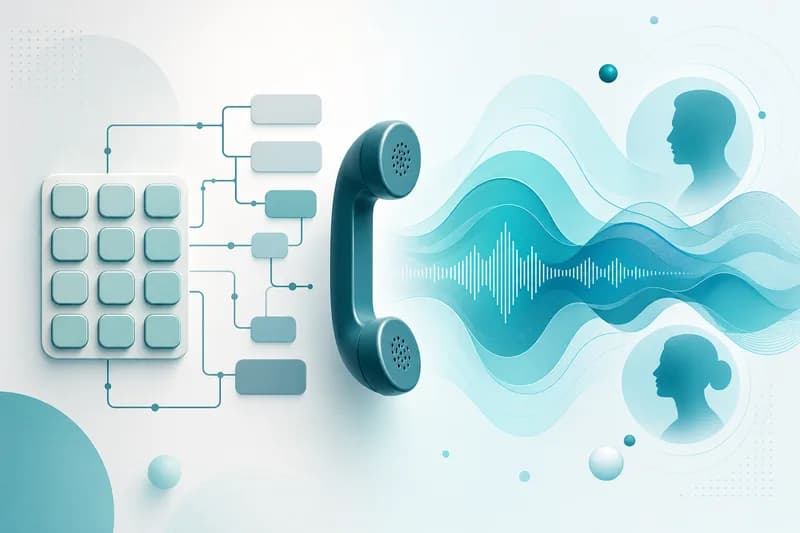
In enterprise contact centers, transitioning to voice artificial intelligence involves far more than connecting a standard large language model. True engineering excellence lies in millisecond-level synchronization across the telecommunications infrastructure (PSTN/SIP), the private branch exchange platform (Asterisk), and the real-time conversational voice bridge. The Yanitly Voice Live architecture couples Asterisk 22.11 PBX, advanced PJSIP signaling, and Netgsm SIP trunking to handle hundreds of concurrent inbound calls with sub-second round-trip latency.
Traditional call centers force customers into lengthy hold queues, whereas AI-driven telephony answers every inbound caller immediately. Achieving natural conversations requires continuous bidirectional audio streaming and concurrency-optimized dialplan engineering.
An enterprise conversational telephony stack comprises four primary engineering tiers:
Latency anywhere across this chain produces awkward conversational pauses that undermine caller confidence.
A frequent vulnerability in voice AI deployments occurs when a single call succeeds, but simultaneous inbound attempts encounter busy signals. This typically stems from misconfigured PJSIP resource boundaries.
To ensure reliable handling of 100+ simultaneous calls, adhere to these configuration principles:
rtp.conf (allocating a minimum pool of 10,000 UDP ports).Dialplan definitions (extensions.conf) must answer immediately without synthetic blocking delays, passing channel media instantly to bridge interfaces such as AudioSocket or ExternalMedia.
Human speech dynamics falter when conversational latency exceeds 600 milliseconds. Yanitly Voice Live achieves sub-second performance through systematic architectural tuning:
Voice frames stream across WebSockets in lightweight 20ms PCM chunks, bypassing heavy buffering to achieve near-instantaneous audio processing.
When a caller interrupts ongoing AI speech with a clarifying remark, the VAD subsystem detects vocal activity in milliseconds. A cancellation signal instructs Asterisk to flush playback buffers instantly, switching the agent to active listening.
Automated contact centers are not designed to eliminate human talent entirely; their objective is to resolve routine volume and escalate nuanced cases seamlessly:
Organizations deploying Yanitly Voice Live telephony architectures unlock profound operational dividends:
Asterisk voice AI integration elevates customer contact centers into high-efficiency relationship drivers.
Use Yanitly voice AI to answer phone requests, automate appointment and information workflows, and connect call summaries to your support team.
Netgsm and enterprise SIP trunking, Asterisk 22 PBX architecture, 100+ concurrent calls, sub-500ms latency tuning, and legacy IVR modernization.
Asterisk provides battle-tested PBX stability, robust PJSIP signaling, high concurrent channel handling, and flexible media streaming bridges like AudioSocket.
Natural human conversation pauses span 400 to 600 milliseconds; latencies exceeding one second cause unnatural interruptions and robotic cadence.
Yes, depending on SIP trunk channel capacity and Asterisk concurrency dialplans, single phone numbers support 100+ concurrent inbound AI sessions.
The voice bridge issues a transfer command via Asterisk AMI/ARI, passing a real-time transcript to the human agent's CRM screen upon handoff.