 yanıtly

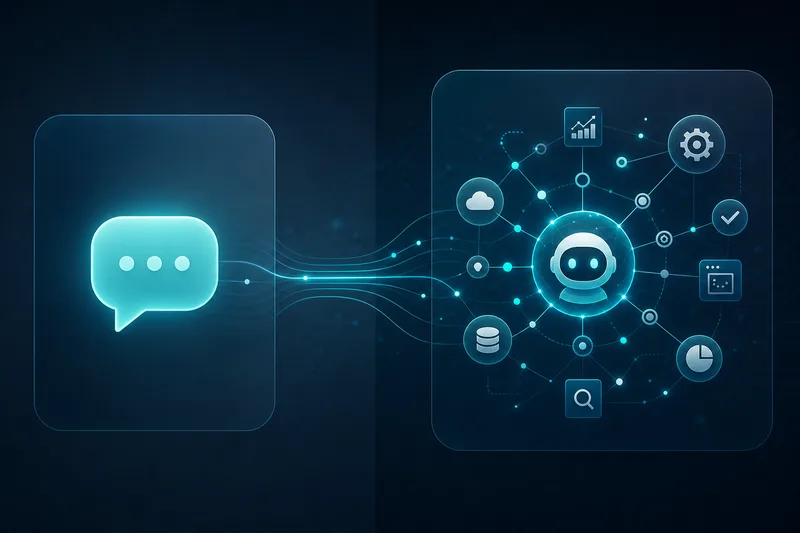
The core difference in the IVR vs AI debate is simple: a traditional IVR routes callers through "press 1, press 2" menus as a touch-tone voice response system, while an AI voice assistant understands what the caller actually says and replies in natural, conversational language. IVR follows a fixed decision tree; an AI voice agent processes free speech, detects intent, and resolves most requests without handing off to a human. In this article we compare the two honestly, weigh their strengths and weaknesses, and explain which one suits which kind of business.
What Is an IVR and How Does It Work?
IVR (Interactive Voice Response) is a voice response system that guides callers through predefined audio menus. The classic "press 1 for billing, press 2 for technical support" lines used by banks and telecom operators are the most familiar example. The system detects DTMF (key-tone) signals or a limited set of voice commands and routes the caller to the right queue or recording.
IVR logic is entirely rule-based: every step follows a flowchart drawn in advance. When a caller wants something the menu doesn't cover, the system stalls, which is why so many people have learned to press zero and shout "agent." IVR is cheap, predictable, and effective for simple routing, but it is inflexible by design.
What Is an AI Voice Assistant?
An AI voice assistant (AI voice agent) uses real-time conversational models to listen, understand, and respond with a fluid, natural-sounding voice. There is no key menu. When a customer says "where is the order I placed yesterday" or "can I book an appointment for tomorrow afternoon," the assistant detects the intent, pulls the needed information from a knowledge base or system, and answers out loud.
Yanıtly's AI voice assistant, voiced by the "Elif" persona, is built on gpt-realtime to hold natural Turkish phone conversations. It listens without cutting the caller off, can create appointments, check order status, and hand the call to a human operator when needed. In other words, IVR's "route and wait" logic is replaced by an "understand and resolve" approach.
Core Differences Between IVR and an AI Voice Assistant
Placing the two side by side makes the contrast clear:
- Interaction style: IVR runs on key presses and fixed menus; an AI assistant understands natural speech and responds to open-ended sentences.
- Flexibility: IVR follows only defined paths; an AI assistant can handle unexpected questions that aren't in any menu.
- Resolution rate: IVR usually routes but rarely resolves; an AI assistant completes a large share of requests within the call.
- Personalization: IVR offers everyone the same menu; an AI assistant can recognize the customer and speak based on history.
- Experience: IVR menu mazes can be tiring; an AI assistant delivers a human-like, uninterrupted experience.
- Setup: IVR is built with a flowchart; an AI assistant is trained with a knowledge base, tone, and rules.
An important note: AI voice assistants don't have to fully replace IVR. Many businesses prefer a "smart IVR" hybrid that handles simple routing with IVR logic and complex dialogue with AI.
Which One Fits Which Business?
The right choice depends on your call volume and the nature of your calls. To decide, follow these steps:
- Identify how many incoming calls are uniform and simple, such as queue routing or business-hours info.
- Measure how many require a real question, an appointment, or actual problem-solving.
- Calculate how many calls go unanswered after hours and during peak times.
- Check the share of "I got lost in the menu" complaints in your satisfaction data.
- Based on these numbers, choose pure IVR, pure AI, or a hybrid setup.
Appointment-heavy service businesses like clinics, dentists, salons, real estate offices, hotels, and restaurants benefit most from an AI voice assistant, since most calls are about booking, availability, and information. Large call centers usually run both together: AI handles greeting and standard tasks, while complex cases go to a human.
Cost, Compliance, and the Local-Language Advantage
On cost, IVR's upfront setup is cheap, but every missed call and every unnecessary agent transfer is a hidden loss. An AI voice assistant works 24/7, including after hours, recovering much of that lost demand and easing the load on agents. For businesses operating in Turkey, local, lira-based billing is a clear advantage over foreign solutions.
On data, compliance is critical. Voice calls process personal data, so how that data is stored and handled matters. Yanıtly is positioned for local businesses with KVKK-compliant infrastructure and natural Turkish language capability, covering both legal and experience needs. Native Turkish understanding is a meaningful edge when interpreting accents and everyday speech correctly.
Conclusion
The choice between IVR and an AI voice assistant isn't about "old versus new"; it's about which one answers your business's needs better. IVR still works for simple routing, but when customers expect a real conversation and a fast resolution, an AI voice assistant pulls clearly ahead. The healthiest approach is often a smart setup that combines both.
Yanıtly is designed to keep your phone line from going unanswered, with a natural Turkish-speaking AI voice assistant, KVKK compliance, omnichannel support, and lira-based pricing. If you want to turn your calls from a menu maze into a real conversation, explore Yanıtly's voice assistant.
Frequently asked questions
What is the main difference between IVR and an AI voice assistant?
IVR is a voice response system that routes callers through fixed touch-tone menus like "press 1, press 2." An AI voice assistant understands natural speech, replies fluently, detects intent, and completes many requests within the call. In short, IVR routes, while an AI assistant understands and resolves.
What is an IVR and what is it used for?
IVR (Interactive Voice Response) routes callers to the right department through predefined audio menus and key tones. The "press 1 for billing" prompts on bank and telecom lines are typical examples. It is useful for simple routing and queue distribution but falls short on questions outside the menu.
What is a smart IVR and how does it differ from classic IVR?
A smart IVR is a hybrid that combines classic touch-tone menus with artificial intelligence. Simple routing runs on IVR logic, while complex, free-speech requests are handled in natural language by an AI voice assistant. This delivers both predictability and flexibility at once.
Can an AI voice assistant understand Turkish conversations accurately?
Yes. Yanıtly's AI voice assistant "Elif" is built on gpt-realtime for natural Turkish phone conversations. It understands everyday speech, accents, and open sentences, can create appointments and check orders, and hands the call to a human operator when needed.
Should I choose IVR or an AI voice assistant for my business?
If most of your calls are simple routing, IVR may be enough. If requests requiring dialogue, such as appointments, order status, or real problem-solving, dominate, an AI voice assistant is far more efficient. For most businesses, the best result comes from a smart hybrid that combines both.
Published: 2026-06-06 · Content updated: 2026-06-06