 yanıtly
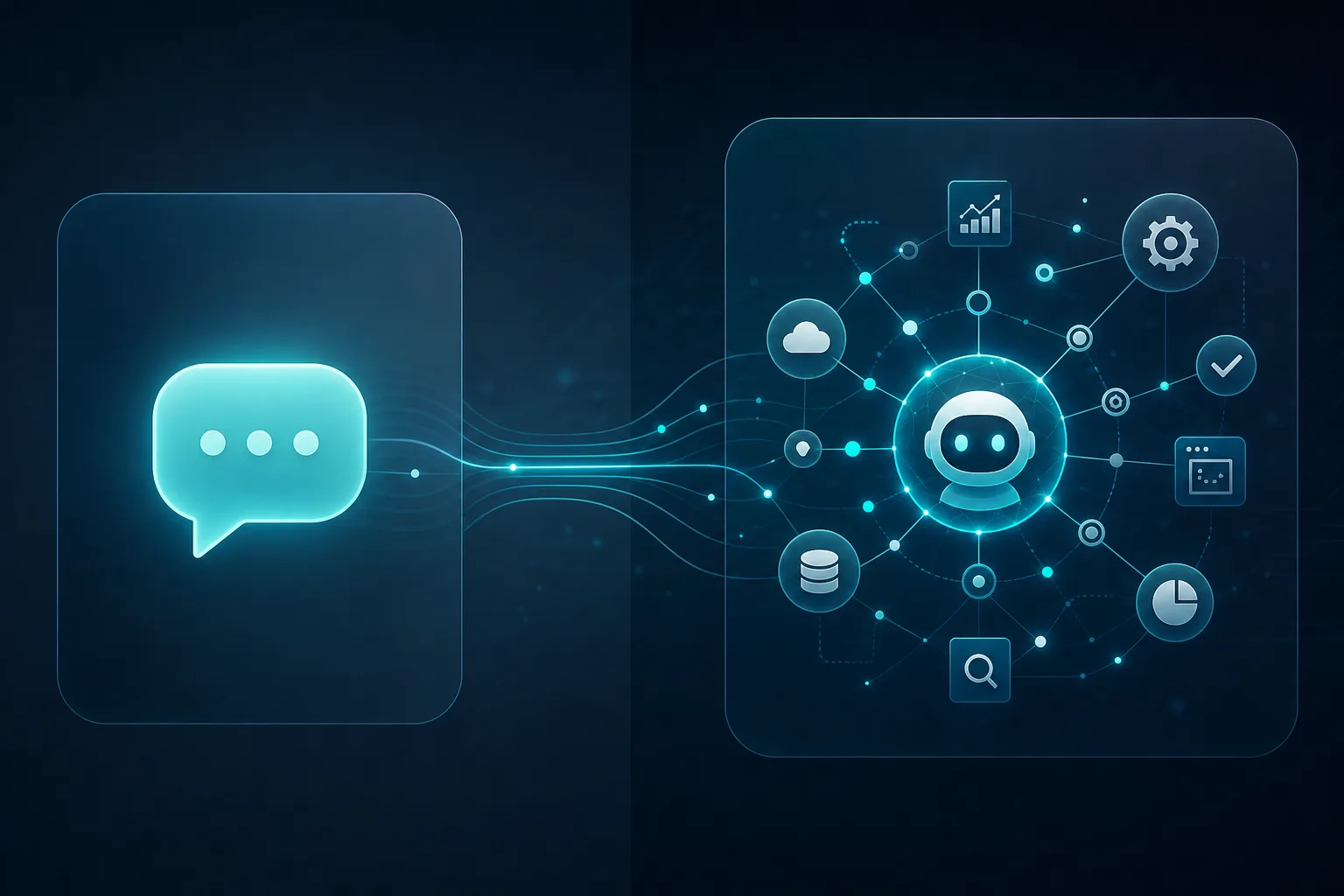
The difference between an AI agent and a chatbot comes down to one sentence: a chatbot answers questions, while an AI agent makes decisions and completes tasks to reach a goal. A classic chatbot returns text from predefined flows or a knowledge base, whereas an AI agent understands intent, plans its own steps, takes action across your systems, and finishes the job. This is exactly the distinction driving the rise of "agentic AI" in 2026.
This article gives an honest comparison of the two concepts, explains which business needs which, and shows how to set up the right combination for support teams.
What Is a Chatbot?
A chatbot is software that converses with users and replies with pre-written or knowledge-base-generated answers. It comes in two main forms:
- Rule-based chatbot: Built on "if the user says X, reply Y" logic, relying on menus and button flows
- AI-powered chatbot: Uses a language model to understand natural language and generate contextual answers from a knowledge base
A chatbot's core job is to provide information: working hours, shipping status, return policy, product details. But most chatbots never go beyond the conversation itself, meaning they cannot independently book the appointment, initiate the return, or cancel the order. They talk; they don't transact.
What Is an AI Agent?
An AI agent is an artificial intelligence system that can reason independently, plan, and take action by using tools to achieve a goal. This capability sits at the heart of autonomous AI customer service.
An AI agent runs a loop: understand the intent, define the goal, plan the steps, call the right tool, check the result, and move to the next step if needed. For example, when a customer says "I'd like a dental appointment tomorrow at 3 PM," the agent checks calendar availability, verifies there's no conflict, creates the booking, and sends a confirmation. That's not a single reply; it's a sequence of decisions and actions.
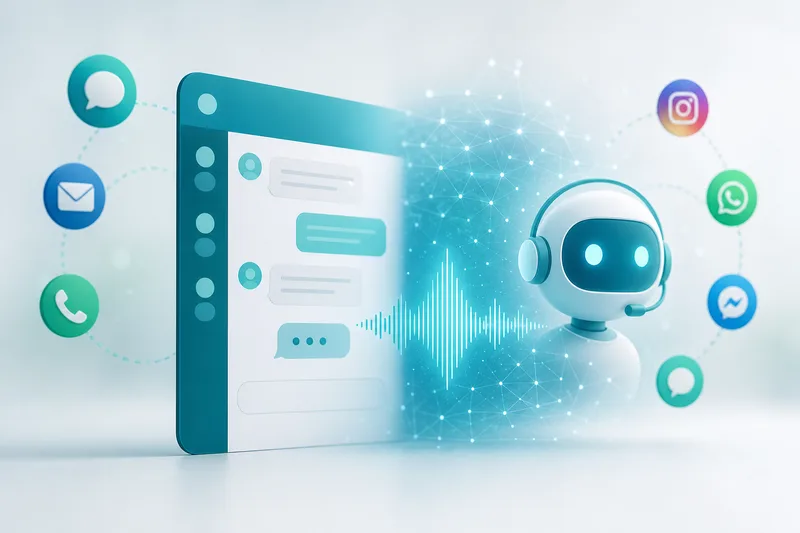
In short, agentic AI gains the ability to "get things done" rather than merely understand language. Yanıtly's voice AI call assistant "Elif" works on this principle too: while speaking natural Turkish on the phone, it simultaneously queries the CRM, books appointments, and hands off to a human operator when needed.
AI Agent vs Chatbot: The Core Comparison
Here are the points that most clearly separate the two technologies:
- Purpose: A chatbot informs; an AI agent completes a task
- Decision-making: A chatbot follows a fixed flow; an agent plans its own path based on the situation
- System access: A chatbot is mostly read-only; an agent acts inside CRM, calendar, order, and payment systems
- Memory and context: A chatbot focuses on one question; an agent maintains context across a multi-step conversation
- Error handling: A chatbot says "I didn't understand"; an agent tries an alternative path or escalates
- Outcome: A chatbot ends the conversation; an agent finishes the job
An important note: an AI agent does not fully replace a chatbot. For frequently asked questions and low-risk interactions, a well-designed chatbot is still fast and cost-efficient. The difference shows up as task complexity grows.
A Practical Example: E-commerce Scenario
Let's see the difference through a customer question to an online store. The customer writes: "The shoes I bought yesterday are too small, I'd like to exchange them for one size up."
A classic chatbot responds by displaying the return/exchange policy as text and saying, "Follow these steps to exchange." The customer has to do the work themselves.
An AI agent, by contrast, carries out these steps autonomously:
- Matches the order number to the customer record in the CRM
- Checks whether the product is eligible under exchange terms
- Queries stock availability for the requested size
- Initiates the exchange request and generates a shipping label
- Sends confirmation and tracking details to the customer
In the first approach the customer gets information; in the second the problem gets solved. For e-commerce, where return and exchange volume is high, this difference cuts resolution time from minutes to seconds.
Which Is Right for Your Business?
The right choice depends on how much action your inquiries require. A practical roadmap:
- If you mostly get informational questions: A knowledge-base AI chatbot is sufficient and economical
- If appointments, orders, and returns dominate: An AI agent delivers measurable time and cost savings
- If you have a mix of information and transactions: A hybrid model combining both plus human handoff is healthiest
- If phone traffic is high: A voice AI agent automating calls reduces wait times
One caution: the more autonomous the agent becomes, the more critical auditability and data compliance get. An agent that acts on customer data should log every step, process data responsibly, and fall back to human approval when required.
Autonomous AI in a Local Context
When deploying autonomous AI customer service, two factors stand out: language and data. General-purpose global bots often miss local language nuances such as formal versus casual address, regional phrasing, and abbreviations. For an agent that takes action, that can mean a wrong booking or an incorrect return.
On the data side, processing, storing, and auditing customer data must comply with local regulations. Yanıtly meets this need by combining natural Turkish language ability, compliant infrastructure, and safe channel integrations like the official WhatsApp Business API. Unlike gray-area bulk messaging tools, it never puts account safety at risk.
Conclusion
The difference between an AI agent and a chatbot is the difference between "answering" and "acting." A smart chatbot is still valuable for informational questions, while an autonomous AI agent delivers real gains in transaction-heavy processes like booking, returns, and orders. The strongest setup combines both with seamless human handoff when needed. Yanıtly brings together a knowledge-base AI chatbot, transactional AI agent capabilities, a voice AI assistant, and operator handoff in a single, compliant panel with local pricing. Try Yanıtly free to find the right balance for your business.
Frequently asked questions
What is the main difference between an AI agent and a chatbot?
The core difference is purpose: a chatbot answers questions and provides information, while an AI agent makes decisions and takes action across your systems to reach a goal. For example, a chatbot shows the return policy, whereas an AI agent actually initiates the return and generates a shipping label. In short, a chatbot ends the conversation; an agent finishes the job.
What is agentic AI and why did it matter in 2026?
Agentic AI is AI that goes beyond generating text to plan independently, use tools, and take action. It gained prominence in 2026 as language models became reliable at calling tools, enabling autonomous agents that complete end-to-end customer service tasks like booking, returns, and orders rather than just answering questions.
Should I choose a chatbot or an AI agent?
It depends on your inquiry types. If incoming messages are mostly informational, a knowledge-base AI chatbot is sufficient and economical. If appointments, returns, and orders are frequent, an AI agent saves time and cost. The ideal setup is a hybrid model that combines both and escalates to a human operator when needed.
Does an AI agent replace human operators?
No. An AI agent autonomously completes routine, transactional tasks, but complex complaints, sensitive issues, and high-value sales still need a human touch. The healthiest approach is a hybrid model where the agent hands off seamlessly to an operator when its confidence drops or the customer requests it.
Does Yanıtly offer a chatbot or an AI agent?
Yanıtly offers both. It answers frequently asked questions with a knowledge-base AI chatbot and provides AI agent capabilities plus a voice AI assistant for appointments, returns, and CRM actions. Everything runs in a single panel with operator handoff, data compliance, and official WhatsApp Business API integration.
Published: 2026-06-06 · Content updated: 2026-06-06