 yanıtly
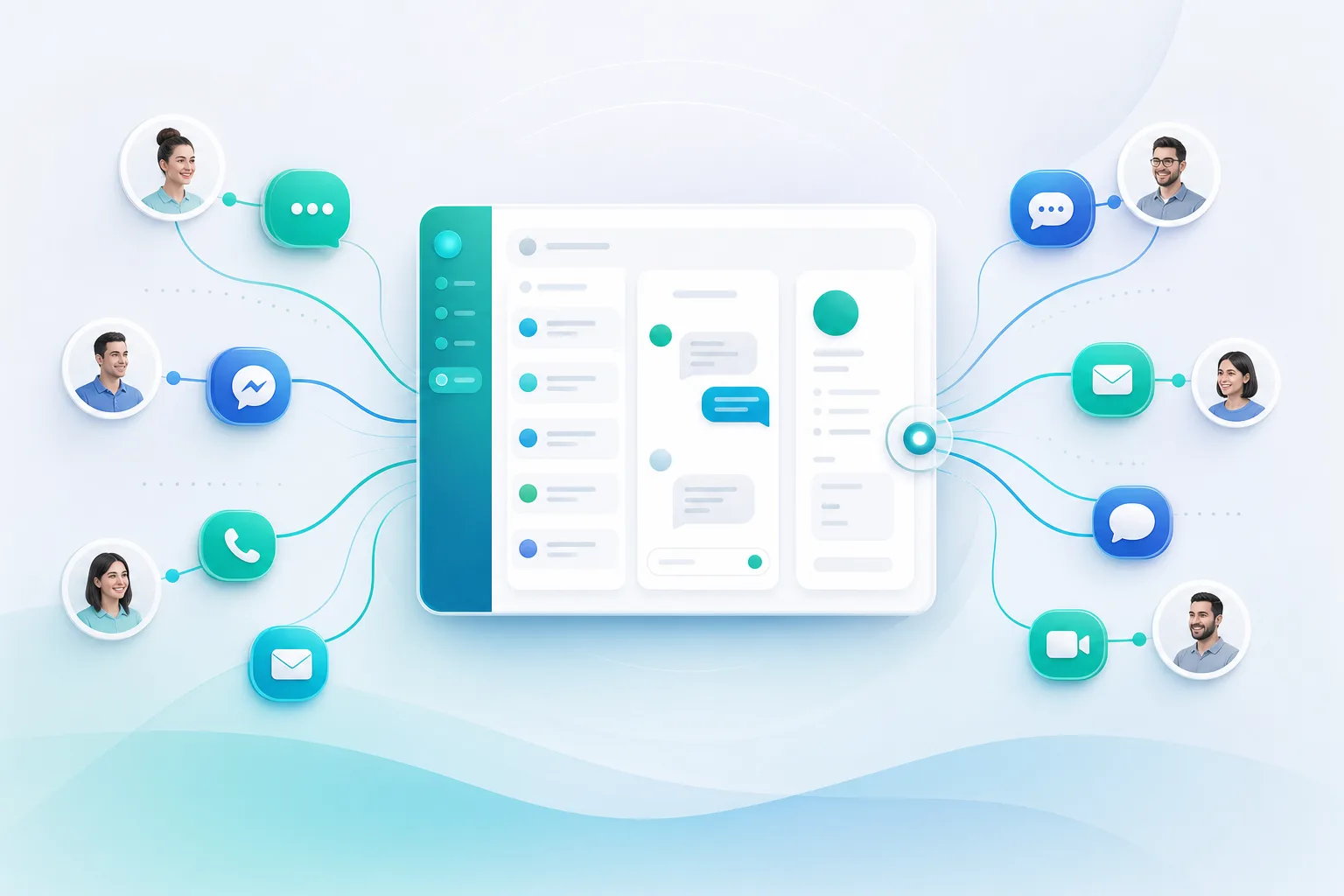
Omnichannel customer support is the practice of managing a business's different communication channels such as WhatsApp, Instagram DM, web live chat, email, Messenger, Telegram, and phone as one connected and consistent experience. No matter which channel a customer reaches out from, their conversation history, order details, and context follow them without being lost. So when a customer starts a conversation on Instagram and continues it on WhatsApp, your agent doesn't have to ask the same questions again.
This approach eliminates the disconnect created by the traditional model of managing each channel separately. A typical small business today receives messages from four or five different channels at once, and tracking them through separate apps is both slow and prone to missed messages.
The Difference Between Omnichannel and Multichannel
These two terms are often confused, but the difference between them is critical. In a multichannel approach, a business is present on multiple channels, yet those channels operate independently. The team handling Instagram is separate from the WhatsApp team and cannot see the customer's history.
In an omnichannel approach, all channels merge into a single hub. The customer is identified as one person, and regardless of which channel they arrive through, their entire conversation history, tags, and notes are gathered in the same profile.
- Multichannel: Channels exist but are disconnected; each one is a separate app with separate history.
- Omnichannel: Channels are unified in a single panel; one customer profile, uninterrupted context.
- Unified inbox: All incoming messages on one screen; agents reply without switching apps.
Why Omnichannel Support Matters
Customers no longer stick to a single channel. An e-commerce shopper might discover a product on Instagram, ask about the price on WhatsApp, and track shipping by email. Delivering a consistent experience at every step of this journey directly affects conversion rates and loyalty.
The concrete benefits a unified support operation brings to a business include:
- Faster responses: Because agents work on a single screen, first response time drops noticeably.
- No missed messages: With all channels in one queue, nothing slips through the cracks.
- Consistent brand voice: Customers encounter the same quality and tone on every channel.
- Efficient team: Operators focus on their work instead of jumping between apps.
- Measurable performance: Metrics from all channels are gathered in one report.
Which Channels Should Be Part of an Omnichannel Setup?
The channels a support operation should cover depend on the habits of the target audience. In practice, the most widely used ones are:
- Official WhatsApp messaging via WhatsApp Business API
- Instagram DM and comment management
- A live chat widget on the website
- Email and a ticket/helpdesk system
- Facebook Messenger and Telegram
- Phone calls handled by a voice AI assistant
On the WhatsApp side in particular, using the official WhatsApp Business API is crucial. Unlike gray-area bulk messaging tools that carry a risk of account bans, the official API offers a secure and sustainable infrastructure.
The Role of AI in Omnichannel Support
As the number of channels grows, message volume multiplies. This is where an AI chatbot steps in: drawing on your knowledge base, it automatically answers frequently asked questions, resolves routine requests, and hands over only complex cases to a human operator. This way, your human team focuses on what truly matters.
Yanıtly's voice AI call assistant, "Elif," conducts natural Turkish phone conversations powered by gpt-realtime, extending the support operation beyond text channels. It handles tasks such as booking appointments, checking orders, and providing information through voice.
Omnichannel Scenarios for E-Commerce and Service Businesses
Imagine an online store: a customer asks on Instagram whether a product is in stock, the AI chatbot instantly shares the product details, the customer buys, and then requests shipping tracking on WhatsApp. This entire journey is recorded in one panel under a single customer profile.
For a dental clinic or hair salon, the scenario differs: a patient calls, the voice AI creates an appointment, a reminder goes out on WhatsApp, and follow-up questions are answered via live chat. Whatever the industry, an omnichannel setup connects every touchpoint of the customer journey.
Data Protection and Compliance
The customer data collected across all these channels must be processed in line with data protection regulations such as Turkey's KVKK and the GDPR. Because an omnichannel platform centralizes data in one place, it makes processes like privacy notices, explicit consent, and data deletion requests far easier to manage.
Built with a Turkey-first focus, Yanıtly treats KVKK compliance as a core design principle. Data is stored not across scattered apps but in a single, auditable infrastructure, providing both compliance and operational clarity.
Conclusion
Omnichannel customer support is the most effective way to deliver the seamless experience today's customers expect. Unifying WhatsApp, Instagram, email, live chat, and phone in one panel shortens response times, makes your team more efficient, and keeps your brand consistent at every touchpoint.
Yanıtly is an omnichannel platform that brings all your channels together in a single panel with natural Turkish language support, KVKK compliance, local marketplace integrations, and a voice AI call assistant. You can start managing your entire support operation from one hub today.
Frequently asked questions
What is the difference between omnichannel and multichannel customer support?
In a multichannel approach, a business is present on several channels, but they are disconnected and customer history is not shared. In an omnichannel approach, all channels merge into one panel, the customer is identified as a single profile, and context carries seamlessly across channels.
Can I manage WhatsApp and Instagram from a single panel?
Yes. Omnichannel platforms like Yanıtly unify WhatsApp Business API, Instagram DM, Messenger, Telegram, email, and live chat on one screen. Your agents see and reply to all messages in the same queue without switching apps, and every customer's full history is gathered in one profile.
Is omnichannel support necessary for small businesses?
Yes. Even a small business often receives messages from four or five channels at once. Tracking them through separate apps leads to missed messages and slow replies. A unified inbox lets small teams manage many channels efficiently with fewer people.
Does an omnichannel platform support data protection compliance?
Omnichannel platforms simplify compliance by centralizing all customer data in one place. Privacy notices, consent management, and data deletion requests are handled from a single point. Yanıtly, built with a Turkey-first focus, treats KVKK compliance as a core design principle.
What does AI do in omnichannel support?
As channels grow, message volume multiplies. An AI chatbot draws on your knowledge base to answer frequently asked questions automatically, resolve routine requests, and hand over only complex cases to a human. Yanıtly's voice AI assistant, Elif, also extends support to phone calls in natural Turkish.
Published: 2026-06-06 · Content updated: 2026-06-06