How is data isolation enforced in a multi-tenant support automation architecture?
Data isolation relies on row-level tenant_id policies, schema boundaries, and partitioned vector indices to guarantee zero cross-tenant data leakage.
Editorial review
This article is reviewed by the Yanitly editorial team for product accuracy, privacy and security claims, and integration references. Technical claims are kept aligned with official documentation or observed Yanitly product behavior.
Updated: 2026-09-18

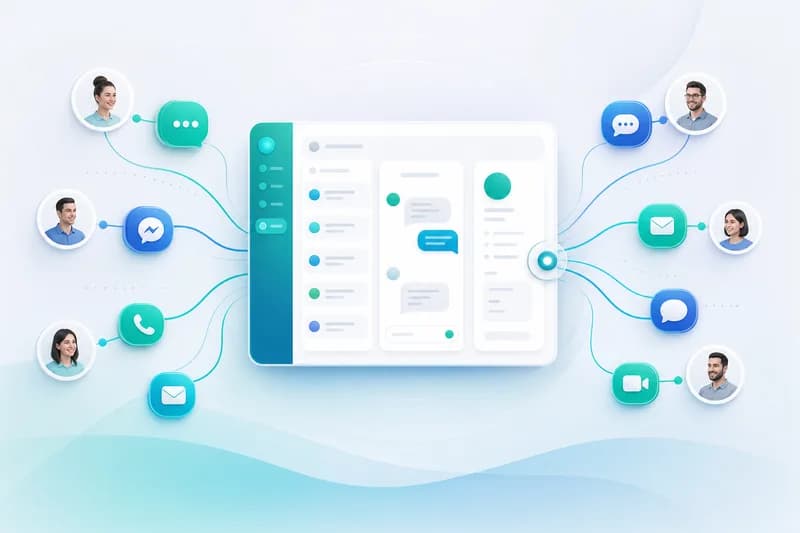
When engineering enterprise B2B Software-as-a-Service (SaaS) platforms, the architectural decision between single-tenant and multi-tenant design represents a defining milestone. In the domain of customer support automation, conversational chatbots, and voice AI contact centers, this architecture reaches maximum complexity. Hundreds of distinct enterprise tenants must share the same underlying computing cluster—sharing database engines, conversational models, and telecommunications PBX infrastructure—while maintaining absolute data isolation and zero cross-tenant contamination. The Yanitly Multi-Tenant Support Architecture couples extreme horizontal scalability with enterprise data segregation.
While single-tenant architectures multiply infrastructure overhead through redundant virtual machine deployments, poorly architected multi-tenant systems introduce existential data leakage liabilities. Yanitly implements a security engineering model that harmonizes enterprise data boundaries with operational cost efficiency.
A resilient, scalable AI support platform enforces tenant isolation across four distinct infrastructure tiers:
Yanitly manages these operational pillars under strict fail-closed engineering guidelines.
The Yanitly backend stack leverages NestJS and PostgreSQL 16. Every database operation executes within an authenticated tenant context:
Upon receiving an API request or WebSocket handshake, the platform validates the JSON Web Token (JWT), extracting the verified tenant identifier (tenant_id) and binding it to the request execution scope.
Services querying the database apply Prisma middleware that automatically appends the tenant_id constraint to every data mutation and query:
In Retrieval-Augmented Generation (RAG) pipelines where language models query proprietary enterprise documentation, boundary enforcement is paramount:
tenant_id metadata; similarity lookups enforce strict tenant equality filters.In voice telephony, Yanitly's multi-tenant PBX architecture unlocks exceptional capital efficiency:
To header.To ensure high-volume promotions by one tenant do not degrade service availability for others:
Yanitly's multi-tenant architecture unlocks profound operational advantages:
Yanitly unites modern cloud engineering excellence with the future of automated customer operations.
Yanitly brings every channel into one helpdesk, adds AI replies, live support, ticketing, SLA management and reporting.
Unified WhatsApp, Instagram, and webchat inbox, e-commerce order tracking and returns, B2B inbound lead qualification, and multi-tenant SaaS architecture.
Data isolation relies on row-level tenant_id policies, schema boundaries, and partitioned vector indices to guarantee zero cross-tenant data leakage.
Incoming SIP DID headers map dynamically to specific tenant IDs, loading the corresponding tenant knowledge base and voice profile in milliseconds.
Yes, each tenant configures proprietary system prompts, brand voice styles, routing thresholds, operating hours, and domain knowledge repositories independently.
Tenant-aware rate limiting and distributed queue pipelines (BullMQ and Redis) ensure high-volume spikes from one tenant do not degrade performance for others.